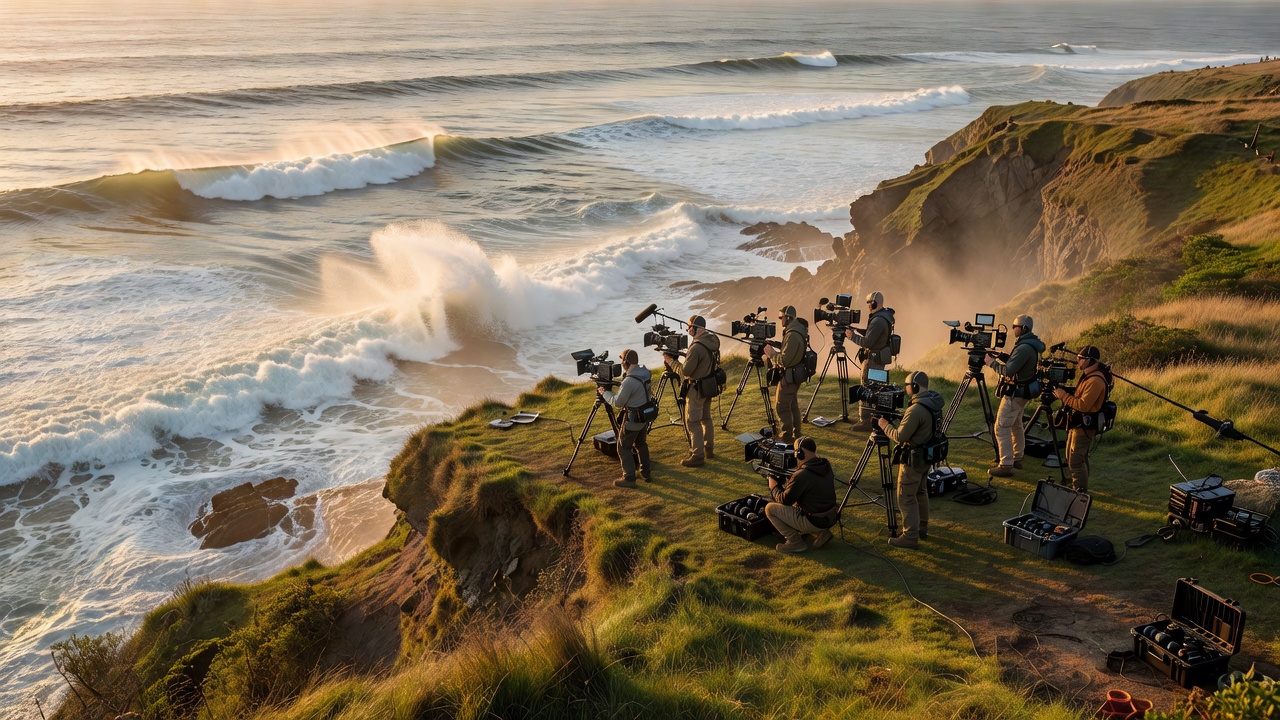
Pipeline and the North Shore: the theatre
The Banzai Pipeline on Oahu breaks over a shallow, ledging reef only a short paddle from a sandy beach. That closeness turned it into surf photography's main stage: winter mornings bring a row of tripods on the sand and a cluster of water shooters bobbing in the channel and, for the brave, the impact zone. Nearby Waimea Bay carries the big-wave history that Greg Noll and others wrote in the late 1950s, history later revisited in Riding Giants.
The North Shore films well because everything is visible: the wave, the crowd, the consequences. It also shows the cost of attention — crowded lineups and a strong local culture that filmmakers ignore at their peril.
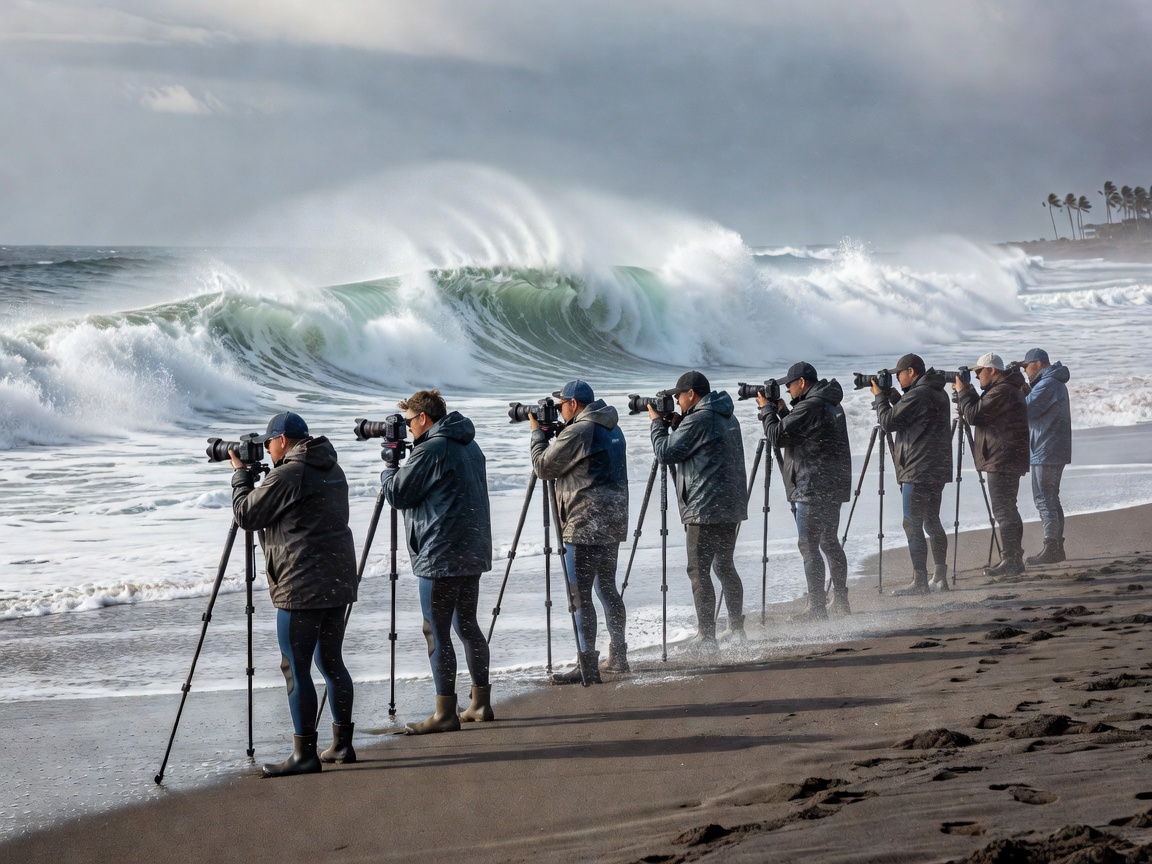
Nazaré, Teahupo'o and Mavericks: the giants
At Nazaré's Praia do Norte, the Nazaré Canyon funnels Atlantic swell into faces that made the town a global name after Garrett McNamara's tow sessions there in 2011; Sebastian Steudtner's ride in 2020 was later recognised as a world record. Cameras watch from the Forte de São Miguel Arcanjo lighthouse — a ready-made grandstand that gives the footage its epic scale.
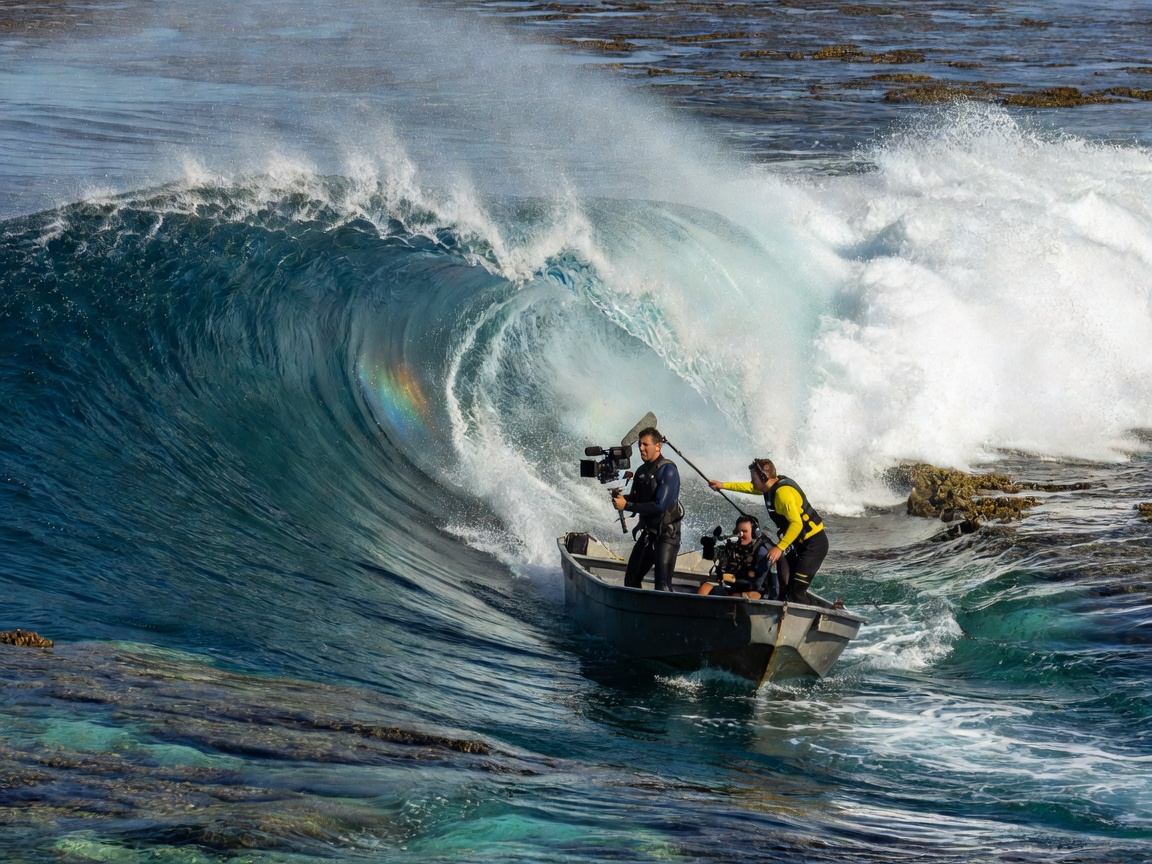
Teahupo'o in Tahiti is the opposite: a thick, low wave over shallow reef, filmed mostly from boats in the channel. During the Paris 2024 Olympics, which held their surfing event there, AFP photographer Jérôme Brouillet captured Gabriel Medina seemingly hovering above the water after a ride — proof that a still frame can outrun hours of broadcast.
Mavericks, near Half Moon Bay in California, was surfed for years by Jeff Clark largely alone before the wider world arrived. Its cold, foggy mood and rocky backdrop gave Chasing Mavericks (2012), the dramatised story of Jay Moriarity, its tone.
Point breaks: where style gets screen time
Long, peeling point breaks give editors something rare: time. At Jeffreys Bay in South Africa, the Supertubes section can let a surfer link turn after turn, so a single ride becomes a scene. Nearby Cape St. Francis became myth through The Endless Summer, which presented it as the "perfect wave" its travellers had searched for.
Malibu's Surfrider Beach shaped the look of California longboarding and, in 2010, became the first designated World Surfing Reserve. In Bali, Uluwatu entered the global imagination via Morning of the Earth (1972), where Alby Falzon filmed Rusty Miller and Stephen Cooney at a then-uncrowded cliff-backed reef. Mundaka in the Basque Country, a river-mouth left, offers a village backdrop that grounds surf footage in community life.
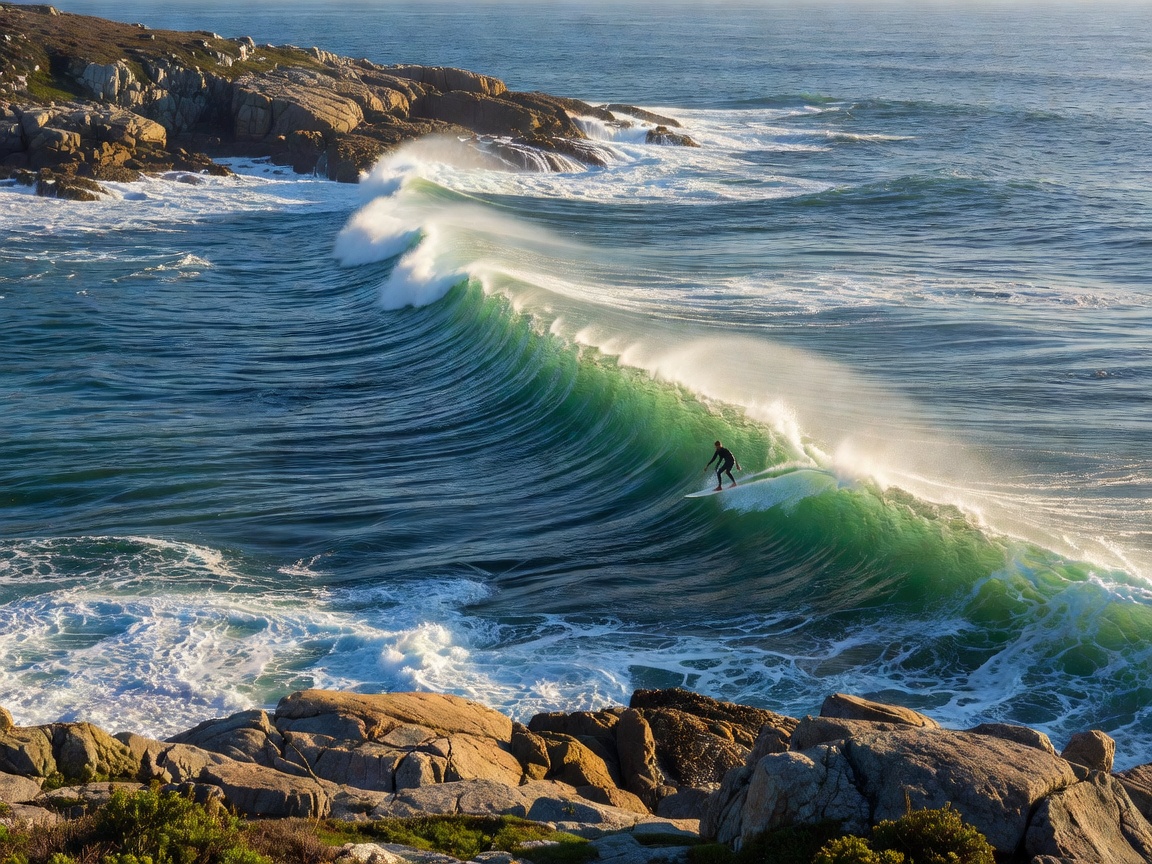
Cold-water frontiers
Recent surf cinema has fallen hard for the cold. Thurso East in Caithness, Scotland, peels in front of a castle ruin and farmland; Mullaghmore Head in County Sligo, Ireland, throws heavy slabs under green fields and big skies. Photographers such as Chris Burkard built careers on snow, wetsuits and low northern light, shifting the genre's mood from postcard paradise to endurance and solitude.
Cold locations change production: batteries drain faster, hands stop working, daylight is short and swell windows are unpredictable. Those limits show up on screen as moodier palettes and longer, quieter passages between waves.
How each coast shapes the film
| Location | Wave type | Typical camera position | Screen character |
|---|---|---|---|
| Pipeline, Oahu | Hollow reef barrel | Beach long lens; water in impact zone | Intense, crowded, theatrical |
| Nazaré, Portugal | Canyon-focused giant beach break | Clifftop lighthouse; jet ski | Epic scale, spectacle |
| Teahupo'o, Tahiti | Thick, shallow reef slab | Boats in the channel | Raw power, tension |
| Jeffreys Bay, South Africa | Long right point | Rocks and elevated shore | Flow, style, length |
| Uluwatu, Bali | Cliff-backed reef left | Cliff paths and warung terraces | Pilgrimage, travel |
| Thurso East, Scotland | Cold reef right | Shoreline and river mouth | Moody, solitary |